Leave the house
Then call from outsideYou smell gas
Natural gas is odorized so you'll notice it. A faint whiff at startup for a second can be normal; a persistent smell is not.
- Don't touch light switches, the thermostat, or anything electrical.
- Don't hunt for the leak.
- Everyone out, pets included, door open behind you.
- From outside: your gas utility's emergency line — CenterPoint in Houston, Southwest Gas in Phoenix, Atmos in Dallas, FPL/TECO in South Florida, SoCalGas in LA — or 911.
- Don't go back in until it's cleared.
Carbon monoxide alarm sounding
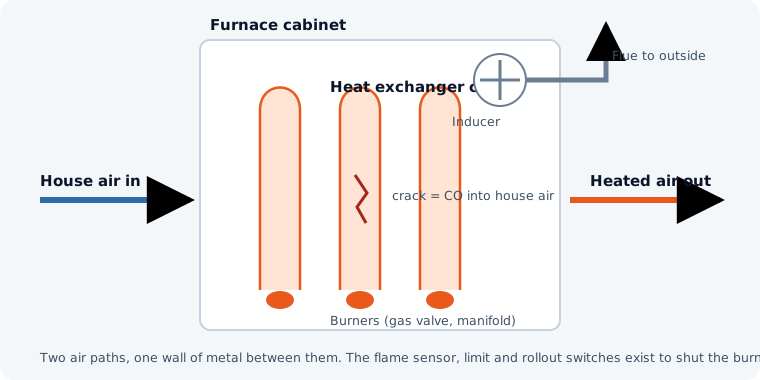
CO is odorless. A cracked heat exchanger, blocked flue, or backdrafting appliance puts combustion gases into living space. Headache, nausea, confusion in more than one person at once is the other sign.
- Everyone outside immediately. Don't stop to open windows.
- 911 from outside.
- Anyone with symptoms gets medical attention — CO effects can worsen after exposure ends.
- The furnace stays off until the exchanger and venting are tested.
Hissing at a gas connection, or flame outside the burner box
Same response. Out first, call second.
After it's safe: (855) 644-0803Shut it off, call today
Not an evacuation. Not something to run overnight.Signs of a cracked heat exchanger
Soot around the burner compartment, a flame that wavers or yellows when the blower starts, water at the base of a high-efficiency unit that isn't condensate, a CO detector that has chirped low readings. Off until inspected — with a combustion analyzer, not a flashlight.
Repeated lockouts
Tries to light, fails, retries, locks out for an hour. Three to five attempts on modern boards. A safety is working — pressure switch, rollout, limit. Find the cause; don't keep resetting.
Rollout switch tripped
Flame escaped the burner box. Manual reset on most furnaces. Resetting it without finding out why — blocked exchanger, blocked flue, low gas pressure — is how the tier above happens.
A burning smell that isn't first-of-season dust
Dust burn-off smells for twenty minutes on the first cold day and stops. Persistent, or plastic/electrical smelling, is a motor, a wire, or a board cooking.
Call this week
Real faults, no safety indicatorsNo heat, none of the signs above
Four things fix more no-heat calls than anything else: thermostat on HEAT above room temp; thermostat batteries; the furnace switch (looks like a light switch, on or near the unit) actually on; filter not packed solid — a blocked filter overheats the exchanger and trips the limit, which reads as "no heat."
Ignition failure
Inducer runs, click, no flame — or flame lights then dies in seconds. Cracked hot-surface ignitor, dirty flame sensor, or gas valve not opening. Ignitor and sensor are wear items; techs carry both.
Short cycling
Heats a few minutes, quits before the house is warm, repeats. Limit switch tripping on overheat — filter, blocked return, failing blower. Occasionally an oversized furnace, which no repair fixes.
Blower runs, air is cold
Burner isn't. Ignition, board calling fan without heat, thermostat wiring — or the fan running to clear the exchanger during a lockout.
Squeal, grind, or a thump on startup
Squeal/grind is a blower or inducer bearing. Thump at ignition is delayed ignition from dirty burners. Neither is dangerous today; both get worse.
Before the season
What a tune-up actually isWorth paying for when it includes combustion analysis and a heat exchanger inspection. A filter swap and a visual for $59 is a sales visit. A real one: burner cleaning and flame inspection; heat exchanger inspection — combustion analysis on anything over ten years; flame sensor cleaning and ignitor resistance; inducer and blower amp draws, capacitor test; manifold gas pressure against the rating plate; limit, rollout, pressure switch operation; flue and venting; condensate trap on high-efficiency units — a clogged trap is a top cause of pressure-switch lockouts. $100–$250, an hour or more.
Winter in these five metros is short, which is exactly why furnaces here fail on the first cold snap — they sat eight months. Get it looked at in October. The maintenance page covers plans.
Component failures, plainly
What each part does, how it fails, what replacement typically runs in these markets.
| Component | What it does | How it fails | Typical |
|---|---|---|---|
| Hot surface ignitor | Ceramic element that glows to light the gas. | Cracks from thermal cycling. Sequence runs, valve opens, nothing lights. The most common furnace repair there is. | $150–$350 |
| Flame sensor | Rod that proves flame so the valve stays open. | Coats with oxide. Lights, dies in 3–5 s. Cleaning usually fixes it. | $80–$250 |
| Inducer motor | Pulls combustion gases through the exchanger and out the flue before ignition. | Bearings or a cracked wheel. Won't start its sequence; pressure switch never closes. | $400–$900 |
| Pressure switch | Proves the inducer is moving air. | Often fine — the condensate trap or flue is blocked upstream. | $150–$350 |
| Limit switch | Shuts the burner off if the exchanger overheats. | Usually trips because of airflow, not because it's broken. | $150–$300 |
| Blower motor | Moves air across the exchanger and through ducts. | Bearings, capacitor, or the ECM control module. Squeal, then no airflow, then the limit trips. | $400–$1,200 |
| Control board | Sequences inducer, ignitor, valve, blower. | Relay failure or a blown trace. Erratic symptoms. Diagnosed by outputs, not by swapping. | $400–$1,000 |
| Gas valve | Opens on command to feed the burners. | Solenoid fails or sticks. Ignitor glows, no gas. Licensed tech only. | $300–$700 |
| Heat exchanger | Separates combustion gases from the air you breathe. | Cracks with age. The CO risk. Past 12–15 years it's a new-furnace conversation. | $1,500–$3,500 or replace |
Furnace repair by metro
Each city page covers local climate, permits, utility rebates and the failure modes specific to that market.
References: US Consumer Product Safety Commission (carbon monoxide safety) · US Department of Energy · Lennox support · Goodman support
Ask before you call
Not sure what's wrong, or whether it's urgent? Describe it. Questions that come up often get added to this page.